How we invest
The businesses that keep the country running
Most people get their exposure to Australian business through listed shares, a managed fund or their super. That covers about two thousand companies. There are 2.8 million others.
First principles
There are only two ways to stand in the flow
Money never stops moving. Someone buys a coffee. Someone gets a switchboard replaced. Someone orders a pallet of stock, books a physio, pays a freight invoice, has the gutters done before summer. Every hour of every day, money moves from people who have it to businesses that provide something.
That movement is the economy. It is not an abstraction and it is not on a screen. It is millions of ordinary Australian businesses taking money over a counter, off an invoice and out of a contract, all day, every day.
You can stand in that flow in one of two ways.
Paid for your time
A wage, a salary, a fee
A share of what a business takes in, paid to you for the hours you put in. It is reliable, it is how most of us have built most of what we have, and there is nothing lesser about it. It has one hard limit: it stops when you stop.
Paid for what you own
A share of the business
The business takes the money in, pays its suppliers, its staff and its manager — and what is left belongs to whoever owns it. Whether they were there that day or not. It does not depend on your hours, and it does not stop when you do.
A wage stops when you stop. Ownership doesn’t.
None of this is a new idea. It is the oldest arrangement in commerce, and everyone in business already understands it. What is odd is how narrow the second option has become for ordinary people.
Through superannuation or a share portfolio, most Australians own a sliver of the very largest listed companies — banks, miners, supermarkets. That is genuine ownership and it is worth having. But it is a tiny and unrepresentative corner of the economy. The businesses you actually deal with every week — the electrical contractor, the food producer, the freight company, the practice down the road — are almost entirely closed to outside owners.
Not because there is a rule against it. Because nobody has made it straightforward.
And you do not have to choose. This is not an argument for giving up your job, your practice or your career. Most of the people who buy into the businesses we sell still work, or have recently stopped, or are managing their own super. Ownership is a second way of being paid, not a replacement for the first — and for most people it should be a portion of what they have, not the whole of it.
That gap — between an economy built on privately owned businesses and an investing public that can barely reach any of them — is the reason we exist.
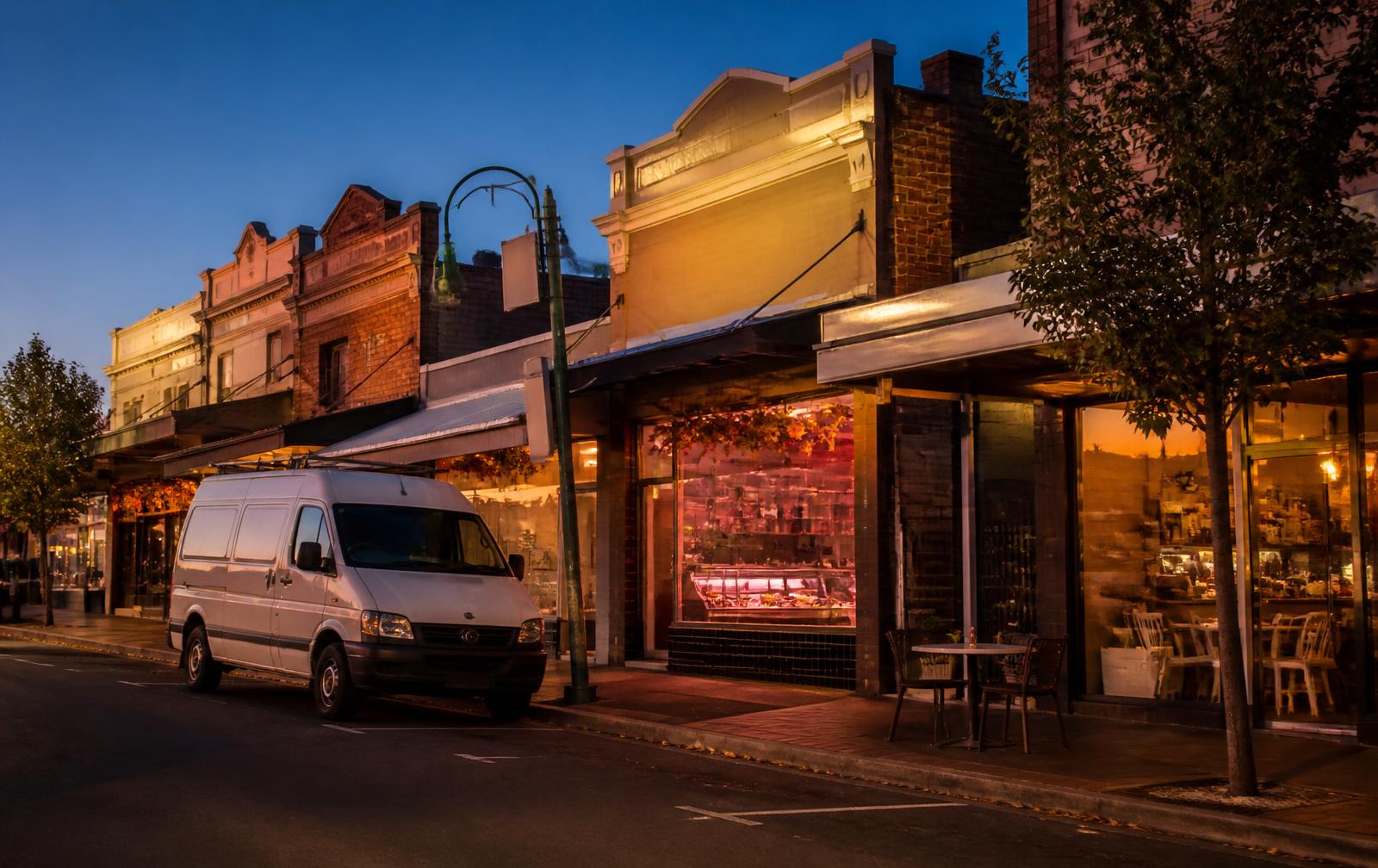
The part of the economy you cannot buy on the ASX
2.8 million businesses, and almost none of them are listed
2,814,778
Actively trading businesses at 30 June 2026
97%
Have fewer than twenty people
$590bn
Annual value added
5.2m
Employed — roughly 39% of private-sector workforce
They are butchers and bakeries, plumbing and electrical contractors, physiotherapy practices, freight companies, engineering shops, childcare centres, cleaning contractors, distributors, workshops and specialist manufacturers. They serve real customers, employ real people and bank real money every week.
Almost none of them can be bought through a broker.
ABS, Counts of Australian Businesses, to June 2026. Employment and value added: ASBFEO analysis of ABS Australian Industry — the 97%, $590bn and 39% figures relate to businesses under 20 employees, measured across selected private-sector industries.
What you actually own
A ticker, or an enterprise
Buy a listed share and you own a fraction of a public corporation. Buy into a private operating business and what sits underneath your investment is a going concern:
Customers
Named accounts, contracts and repeat work — often relationships that are a decade old.
Revenue and cash flow
Money banked weekly from work actually performed, not a quarterly market expectation.
People
Tradespeople, technicians, administrators and a manager who runs the place.
Assets
Vehicles, plant, equipment, stock, fit-out, a lease, sometimes intellectual property.
Systems and suppliers
Scheduling, quoting, compliance, purchasing arrangements and trade accounts built over years.
Goodwill
A name that people in the district already call when something breaks.
The business underneath is not a symbol on a screen. It is an enterprise. That distinction matters if you would rather understand exactly what you own than accept a price the market sets for reasons nobody can explain.

Real accounts, real contracts, real assets.
The question underneath
What are you paying for that return?
When people compare investments they usually start with the return. The more useful question is what you had to pay to get it — because two investments can look similar on the way in and behave completely differently once you own them.
Here is that question asked of three things Australians actually put money into. These are simplified illustrations, not forecasts. Real valuations, financing, tax and outcomes vary enormously.
Listed shares
You carry two risks, not one
Say a listed company earns $10 million a year and the market values it at $100 million. Investors are paying ten times annual profit. Put $100,000 in and you have bought a claim on about $10,000 of annual earnings.
Now suppose the company does exactly the same thing next year. Same customers, same $10 million profit, nothing goes wrong. But sentiment shifts and the market decides companies like this are worth seven times earnings instead of ten. The business performed. You are down 30%.
ASX 200 forward P/E and earnings growth, FactSet, Aug 2026. Long-run norm, AMP, Feb 2026.
Property
There are three parties in the deal, and one of them always gets paid
Property is tangible, and that counts for something. But most Australian investors do not buy it with cash, and the borrowing is where the economics actually live.
Buy a $1,000,000 property with $200,000 of your own money and an $800,000 loan. Carry that loan for thirty years at today’s average investor rate of 6.41% and you repay about $1,803,000 — roughly $1,003,000 of it interest.
You — the equity
Put in the deposit. Carry the ownership risk. Pay rates, insurance, maintenance and vacancy. Keep whatever growth is left.
The bank — the capital
Provides four fifths of the price. Collects interest for thirty years. Is secured against the property. Does not need it to rise in value.
The property — the asset
Produces about 2.2–2.7% in rent after costs. Against a loan costing 6.41%. So the price has to rise for the deal to work.
RBA Lenders’ Interest Rates, July 2026 (investor housing). Rental yields, Cotality, Aug 2026. Repayment figure assumes a constant rate for thirty years — an illustration, not a forecast.
Private business
Priced on earnings, and the earnings are something you can change
A private business has no ticker and no crowd repricing it every second. Its value is worked out from things you can look at: revenue, profit, cash flow, assets, customers, contracts, position in the market, comparable sales.
A business is bought for $1,000,000 on annual profit of $200,000 — five times earnings. Over the next few years the owners lift profit to $300,000 by tightening pricing, cutting waste, negotiating supply and adding a crew.
At the same five times earnings, the business is now worth $1,500,000. The improvement created $500,000 of value — on top of every dollar of profit distributed along the way.
Not in financial engineering. In ordinary, unglamorous improvement: better pricing, better systems, better purchasing, better people, one more crew.
Three ways of thinking
Which problem are you trying to solve?
| The mindset behind each | The bet | What you control |
|---|---|---|
| Listed shares | “I buy in, and the market sets the price.” | When you buy and when you sell. Nothing else. |
| Property | “I borrow, collect rent, and wait for the value to rise.” | The property, the tenant, the loan. Not the market. |
| Private business | “I buy something that earns, and help it earn more.” | Pricing, costs, systems, people, growth — and who runs it. |
There is no universal answer and we are not going to give you one. A listed portfolio is right for some people. Property is right for others. A private business suits someone who understands the illiquidity, accepts the concentration, and would rather own something that can be improved than something that can only be held.
Don’t just buy an asset. Buy the chance to build one.
Where it fits
Three different things, not a competition
We do not think private business should replace listed shares or property, and we will not pretend it should. They are different asset classes with different risks, different liquidity and different jobs to do. For most people this is a portion of a portfolio, not the whole of one — and what portion, if any, depends on your circumstances and your own adviser.
And it is not magic
A business can fail. Profit can fall. Customers leave, staff leave, costs rise, and a shareholding in a private company can be very hard to sell at any price. Nothing about buying a business removes those facts — which is why the price you pay going in, and the work you do before you pay it, matter more here than in almost any other investment.
What we look for
A business is more than last year’s profit
Financial performance
Three years of revenue, gross margin, operating expenses, earnings and cash flow — and whether the story they tell is consistent.
Customers
How many, how long they have been there, how much work repeats, and whether losing the largest one would matter. We do not buy businesses where one customer is much above a fifth of revenue.
Operations
Staff, systems, scheduling, suppliers, compliance. Whether the place runs on process or on memory.
Market position
Who else does this locally, what it would cost someone to start competing, and why customers pick this business.
Room to improve
Pricing, marketing, technology, purchasing, a second crew, an adjacent service. Not required — but it is upside we are not paying for.
Assets
Vehicles, plant, stock, fit-out, leases and what it would cost to replace them.
Owner dependence
The one that decides everything. See below.
The test that matters most
Does it need its owner, or does it just have one?
Most small businesses for sale in Australia are really jobs. The owner quotes the work, does the work, chases the money and knows every customer personally. Take the owner out and there is very little left. Those businesses are unsellable for a reason, and we do not buy them.
The businesses we want are the other kind: a manager already runs the day, the owner has stepped back, the systems hold the knowledge, and the business would keep trading on Monday if the owner never came in again.
Why this is the whole game
You are buying a passive stake. If the business needs a full-time owner and does not have one, the profit you were shown is not profit — it is somebody’s wage with a different label on it. Every figure we put in front of you is stated after a real manager is paid a real salary, because that is the only number a shareholder can actually receive.
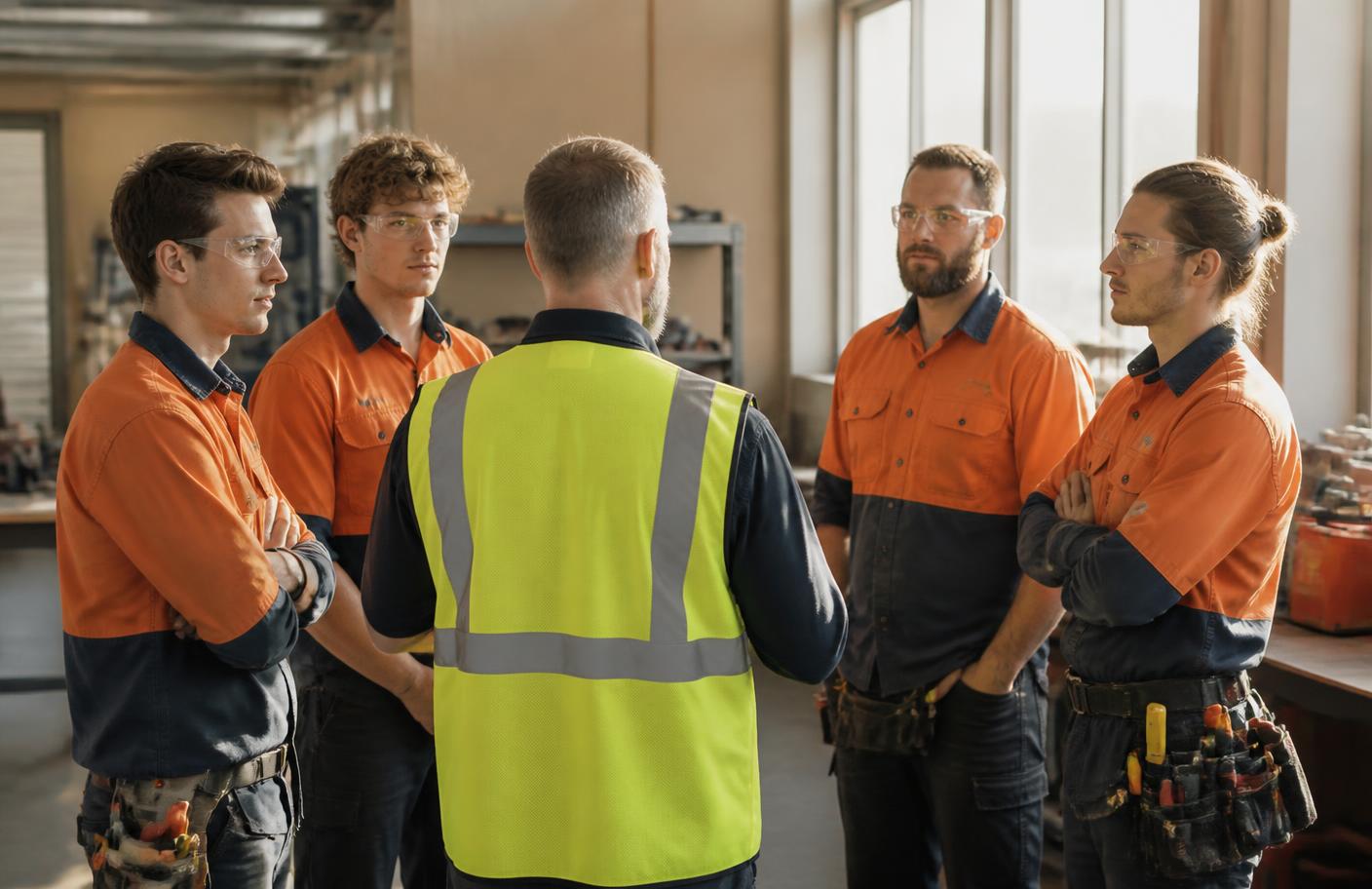
A manager runs the day. Systems hold the knowledge.
Where the upside comes from
A good business that could be a better one
Plenty of established businesses have strong customers and steady revenue while still running on a whiteboard and a mobile phone. What they often lack is not effort. It is:
- —Monthly financial reporting the owners can actually read
- —Job management and scheduling software instead of memory
- —Pricing that has kept up with costs
- —A website that a customer under fifty would use
- —Purchasing discipline and supplier terms
- —A second person who could run it
- —Capital to take the work already being turned away
None of that is exotic and none of it is guaranteed to work. But it is ordinary, unglamorous improvement that a listed shareholder has no ability to make and we do. Anything it produces is on top of the return you were shown when you bought in.

Work already booked. Capacity to take more.
What we buy
Narrow on purpose
We look at
- •Trades and contracting — electrical, plumbing, HVAC, fire, mechanical
- •Maintenance and facilities services
- •Business-to-business services with contracted or repeat work
- •Distribution, wholesale and light manufacturing
- •Food and hospitality at scale — multi-site venues, catering, food production and wholesale — where a manager already runs it
- •Specialist services with licences or accreditation
- •Ten or more years of trading history
- •A manager or supervisor already in place
We do not look at
- •Owner-operated single sites — the café where the owner is on the coffee machine, the shop that shuts when the owner is sick
- •Anything dependent on one person’s licence, skill or personal relationships
- •Businesses under about three years old
- •Start-ups, turnarounds and anything currently losing money
- •Businesses where one customer dominates revenue
- •Anything we would not put our own 20% into
The industry matters less than the structure. We will look at a hospitality group, a catering company or a food producer with the same interest as an electrical contractor — what decides it is whether the business runs without the person who owns it. A single café where the owner works the machine is a job with a lease attached. A four-venue group with an operations manager is a business.
Most enquiries are declined in the first conversation, and we tell people why.
What can go wrong
A longer version of what appears on the investor page
A private business can be affected by all of the following, and we have seen most of them:
Businesses fail. An investment may lose some or all of its value. There is usually no ready market for a shareholding in a private company, so you should assume you cannot sell when you want to. There is no guaranteed return, and nothing that has happened before predicts what happens next.
This is not capital protected, it is not low risk, and it is not for money you might need back.
Being straight about it
This is not a promise of returns
We do not think anyone promoting an investment should suggest every one of them will work. Some businesses will do better than we expected. Some will do roughly what we expected. Some will do worse.
What we can commit to is the part we control: buying carefully, at a price that leaves room for things to go wrong, doing proper due diligence, telling you exactly what we paid and what we are making, keeping a fifth of every business ourselves, and putting the bad news in front of you as quickly as the good.
Before committing to anything you should consider the risks, the costs, the liquidity and whether it suits your circumstances at all — and you should get your own legal, accounting and financial advice.
Next
What a conversation covers
If you register your interest, the first call is not a pitch. It is us working out whether any of this suits you, and you working out whether we are worth your time. We would normally cover:
- —The kinds of businesses we buy, and what we have looked at recently
- —How a holding is structured, and what your rights as a shareholder would be
- —The minimum amount, and the realistic time horizon
- —What we disclose before you commit — including what we paid
- —How and when owners can exit
- —The eligibility questions we have to ask before discussing a specific business
Important information
The information on this website is general information only. It has been prepared without taking into account any person’s objectives, financial situation or needs. Nothing on it is personal financial advice, legal advice, taxation advice or accounting advice, and nothing on it is a recommendation that any person acquire, dispose of or invest in any particular business, security or financial product. Nothing here is an offer.
Horvat Capital sells shares in companies it owns, as principal and on its own behalf. It is not your adviser, does not act for you, and does not provide financial product advice. Any opportunity is made available individually, is subject to its own terms, structure, due diligence, eligibility requirements and legal documentation, and is not offered to the public. Registering an interest is not an application and creates no entitlement.
Risk. Private business investment involves significant risk. Businesses can fail, holdings are illiquid, valuations are uncertain, and an investor may lose some or all of the money invested. There is no guarantee of performance, capital preservation, income or return. Past performance does not indicate future performance.
Figures. Every figure on this site is sourced where it appears and was verified at the date shown. Any reference to a business, price, valuation, growth opportunity or return is illustrative only unless expressly stated otherwise and supported by the relevant transaction documents. Prospective investors should obtain independent legal, financial, taxation and accounting advice before proceeding.
Business owners. An enquiry about selling your business is not an offer by us to buy it. Any acquisition is subject to due diligence, negotiation, satisfactory documentation, funding, legal and regulatory requirements and final approval. We may decline any opportunity.
Your details. By submitting your contact details you consent to being contacted about your enquiry, in accordance with our Privacy Policy and Australian privacy and communications law. You can withdraw that consent at any time.