Private business ownership
Own a real business. Without running one.
An established Australian business that already makes money, with a manager already in place, owned by a small group of people rather than one. Are you interested in owning a share of a good private business? That is the conversation we have.
Illustrative snapshot

What you would own
Not a ticker. A business with vans in the yard.
An electrical contracting business on the Central Coast. Twelve years old. Seven electricians, five vans, and a book of maintenance contracts with schools and aged care homes that renews every year.
Last year it made $250,000 — after paying a full-time manager to run it and after replacing two vans. You would own a share of it.
You would get the monthly accounts. A say in decisions that matter. The manager’s phone number. And your share of the profit, paid out, from work the business actually did — not from finding someone to sell your shares to.
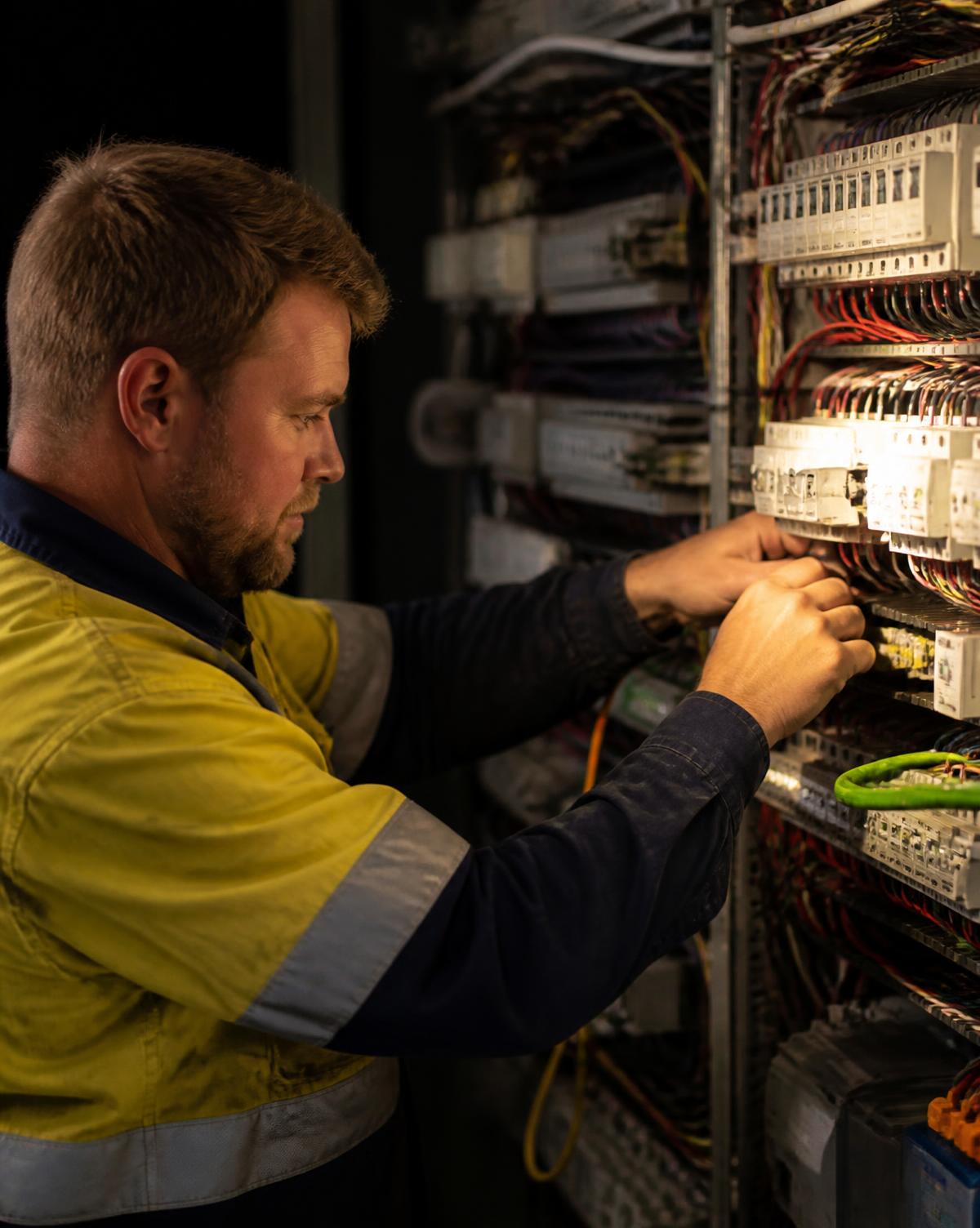
Illustrative of the businesses we buy.
Why these businesses are available
Australia is about to lose a generation of good businesses
More than 500,000 Australian businesses are owned by someone over 60. Last financial year, 375,331 businesses closed their doors. Most were not sold. They were shut — profitable, working businesses with staff and customers, closed because nobody could buy them.
The reason is simple. Banks will not lend much against a business unless you put your house up. So a willing buyer, standing in front of a good business, usually cannot get the money together.
- — Good businesses. No buyers. Prices that reflect it.
ABS, Counts of Australian Businesses, to June 2026. Ownership age: ASBFEO, 2025–26.
The price
Five years’ profit. So one year’s profit is a fifth of what you paid.
That is the whole idea, and it is worth saying slowly.
The business above makes $250,000 a year. A business like it changes hands at around five years’ profit — so about $1,250,000. Put in $100,000 and you own roughly 8% of it, and 8% of the profit is $20,000.
$20,000 of profit a year, on $100,000 invested
This is not a forecast. It is a division.
Nobody is predicting the business will grow, or that anyone will pay more for it later. If you pay five years’ profit for something, one year’s profit is a fifth of what you paid. That is arithmetic, not optimism. The only question that matters is whether the business keeps earning what it earned last year — which is why we buy businesses with a decade or more of history, a manager already in place, and contracts that renew.
It scales the same way whatever you put in. Anything the business grows by is on top. So is anything it is worth when it is eventually sold. Neither is counted in the 20%.
Profit is stated after paying a full-time manager and after replacing equipment — it is the money genuinely available to owners, not the owner’s wage in disguise. Figures are illustrative of the businesses we buy, not a completed transaction.
The numbers, simply
Your money back in five years
At a fifth of what you paid arriving every year, your original investment is returned to you inside five years — and you still own the same share of the same business. Everything after that is profit on money you have already got back.
$140,000 profit paid to you — $20,000 a year
Assumes the business earns what it earned last year, with no growth and no increase in value. Profit is paid before personal tax; company tax is franked to shareholders in the normal way. Illustrative, not a promise. Any real opportunity comes with its own audited accounts.
The same business, three different stakes
| You invest | You own | Your share of profit | Return |
|---|---|---|---|
| $100,000 | 8% | $20,000 a year | 20% |
| $250,000 | 20% | $50,000 a year | 20% |
| $500,000 | 40% | $100,000 a year | 20% |
Profit is stated after paying a full-time manager and after replacing equipment — it is the money genuinely available to owners, not the owner’s wage in disguise. Figures are illustrative of the businesses we buy, not a completed transaction.
Compared with the alternatives
The same $100,000, three ways
| What your money buys | Shares | Investment property | A business |
|---|---|---|---|
| You pay, per $1 of annual profit | about $17.50 | — | about $5.00 |
| Cash it pays you each year | 3.6% in dividends | 2.2–2.7% rent after costs | around 20% of what you paid |
| Where the rest of the return comes from | someone paying more than you did | the price going up | nothing else is needed |
| What you can see | a half-yearly announcement | a rental statement | the monthly accounts |
| What you can change | nothing | the paint | you have a say and a vote |
| How fast you can get out | same day | a few months | years |
On the share market you pay about $17.50 for every dollar a company earns in a year, and it hands you about 3.6% of your money back as dividends. The rest of your return depends on someone else paying more than you did.
On an investment property, rent covers roughly 2.2–2.7% a year once management, rates, insurance, maintenance and vacancy are paid — so that return also depends on the price rising. National values are currently 3.6% below their March peak.
A business pays you whether or not anyone wants to buy it this year.
ASX 200 forward earnings and dividend yield, FactSet, Aug 2026. Rental yields and dwelling values, Cotality, Aug 2026. Business pricing reflects the businesses we buy, not an average market price.
Practicalities
How much, and how it is paid for
Minimum $100,000
Below that the paperwork costs more than the stake is worth, for you and for us. Most people come in between $100,000 and $500,000.
A small group of owners
Never a crowd. Enough people that no single one carries the whole business, few enough that everyone knows who the others are and decisions can actually be made.
Paying for it
Most people use savings, a self-managed super fund, or equity they already have. If it helps, we can introduce you to finance brokers who arrange lending for business purchases. We do not lend to you ourselves and take no fee for the introduction.
Getting out
There is no market in these shares. Exit is by agreement among the owners on a defined timetable, and it is measured in years. Ask us about it early rather than late.
What can go wrong
This is on the page rather than in a footnote, and above the enquiry form rather than below it, for a reason.
The people who invest with us are the ones who read this and invest anyway.
- — Businesses fail. Some will earn less than they do today, some will stop paying their owners anything, and some will be worth nothing. You can lose every dollar you put in.
- — The 20% is last year’s profit, not a guarantee of next year’s. If trading falls, so does what you are paid — and it can fall a long way.
- — You cannot sell when you feel like it. There is no market in these shares. Getting out is by agreement among the owners, and it takes years.
- — You own one business. Lose a big contract or a key person and there is nothing else in the portfolio to cushion it.
- — The price reflects the risk. Businesses change hands at five years’ profit and not seventeen precisely because they are illiquid, concentrated and dependent on a handful of people. You are being paid for accepting that, not getting something for nothing.
- — This is not capital protected, it is not low risk, and it is not for money you might need back.
Why we are on the same side
We keep a fifth, and we charge you nothing
We own what we sell
We sell shares in businesses we already own — not somebody else’s deal we are introducing you to. We bought it with our own money and we keep a fifth of it, so if it turns out badly, it turns out badly for us too.
We keep 20% of every business
The same shares as you, at the same price, on the same terms. We cannot get out before you do.
No fees at all
No management fee, no commission, no success payment. What we earn is the shares we keep and what they pay.
Everything in writing first
Before you commit to anything you get the accounts, the terms, the structure and the risks in writing, to take to your own accountant and solicitor.
We make money the same way you do, and only when you do.
Get in touch
We do not publish opportunities
Leave your details and we will call you to talk about what you are looking for and whether any of this suits you.
Important information
The information on this website is general information only. It has been prepared without taking into account any person’s objectives, financial situation or needs. Nothing on it is personal financial advice, legal advice, taxation advice or accounting advice, and nothing on it is a recommendation that any person acquire, dispose of or invest in any particular business, security or financial product. Nothing here is an offer.
Horvat Capital sells shares in companies it owns, as principal and on its own behalf. It is not your adviser, does not act for you, and does not provide financial product advice. Any opportunity is made available individually, is subject to its own terms, structure, due diligence, eligibility requirements and legal documentation, and is not offered to the public. Registering an interest is not an application and creates no entitlement.
Risk. Private business investment involves significant risk. Businesses can fail, holdings are illiquid, valuations are uncertain, and an investor may lose some or all of the money invested. There is no guarantee of performance, capital preservation, income or return. Past performance does not indicate future performance.
Figures. Every figure on this site is sourced where it appears and was verified at the date shown. Any reference to a business, price, valuation, growth opportunity or return is illustrative only unless expressly stated otherwise and supported by the relevant transaction documents. Prospective investors should obtain independent legal, financial, taxation and accounting advice before proceeding.
Business owners. An enquiry about selling your business is not an offer by us to buy it. Any acquisition is subject to due diligence, negotiation, satisfactory documentation, funding, legal and regulatory requirements and final approval. We may decline any opportunity.
Your details. By submitting your contact details you consent to being contacted about your enquiry, in accordance with our Privacy Policy and Australian privacy and communications law. You can withdraw that consent at any time.